Categories
MTG Proxies

MTGCardBuilder Expands the Online MTG Card Editing Experience

The latest release of MTGCardBuilder puts the editing process at the center of its custom card platform. Rather than treating a Magic The Gathering card as a fixed template with a few replaceable fields, the online MTG card editor provides controls across the frame, typography, artwork, symbols and supporting visual details.

A card can begin with frame selection. MTGCardBuilder maintains a large collection of frames and continues to add more options, giving creators different foundations for their designs. From there, individual card information can be changed, including the title, power, rarity, set symbol, borders and text.

Typography receives its own level of control. Users can select fonts and alter font size and color, as well as apply text formatting. Mana symbols and other game related symbols can be incorporated where appropriate. These options matter when a card contains more than a short title and a line of rules text, particularly when several text elements need to fit within a defined card layout.

Artwork is handled as an editable component rather than a static upload. Users can add their own images and then change positioning, scale, opacity and other visual properties. That allows an image to be fitted to the card instead of forcing the entire design around the dimensions of the original artwork.

Set symbols receive similar attention. MTGCardBuilder includes a set symbol library, and users can add and customize symbols as part of the overall card design.

The editing environment also supports work that moves beyond a single pass. Presets can assist with recurring configurations, collector information can be incorporated, and card importing provides another route into the editor. Existing cards in the platform gallery can also be duplicated and changed, which is useful when a creator wants to build a variation rather than reconstructing a design manually.

Once editing is complete, MTGCardBuilder provides high resolution output. Its free card creator currently advertises 1200 DPI output, alongside tools for handling multiple card images and assembling printable card sheets.

The new release is available through the official MTGCardBuilder website and continues the platform’s focus on combining accessible online creation with detailed card level editing.
Categories
mtg proxy

How to Use MTG Playtest Cards Effectively: A Practical Deck-Testing Workflow

Playtesting becomes much more useful when you know what you are trying to learn. Swapping ten cards into a Commander deck, playing once, and deciding the deck feels better does not tell you much.

A cleaner testing process helps separate actual improvements from one unusually good opening hand.

Start With a Specific Question

Pick the problem before choosing the replacement.

Maybe your deck regularly misses its third land drop. Perhaps you have enough mana but nothing useful to do early. Maybe a combo looks strong in theory but requires too many pieces.

Now choose cards that address that specific issue.

An MTG playtest card is particularly useful here because you can test a possible solution without treating the deck list as final.

Keep the substitute readable. Include enough information to play it correctly without constantly checking a card database.

Goldfish What Goldfishing Can Actually Test

Playing sample hands by yourself is useful for checking basic deck mechanics.

Draw seven cards. Mulligan as you normally would. Play out the first several turns and watch for patterns. Are colors available when needed? Can the deck make meaningful early plays? Does the curve repeatedly leave unused mana?

Goldfishing is much less useful for judging interactive cards. A counterspell, protection spell, or political Commander card needs opponents to provide meaningful context.

Use solo testing for sequencing and consistency, not as proof that the whole deck works.

Play Real Games and Take Small Notes

Once the deck passes basic sample hands, put it into actual games.

You do not need a spreadsheet recording every draw. A few short notes are often enough. Mark cards that repeatedly sit dead in hand, situations where you lacked interaction, awkward mana, or turns where the deck had resources but no productive play.

Pay attention to why something failed. A seven mana creature may look bad because the deck cannot reach seven mana reliably. Replacing the creature does not solve the underlying ramp problem.

Change One Variable at a Time

Testing gets messy when five or ten slots change simultaneously.

If possible, replace one card or one small package and run the deck again. This makes cause and effect easier to see.

It also helps prevent overreacting to individual games. Drawing a test card once and seeing it perform perfectly does not prove that it deserves the slot. Likewise, one bad draw does not automatically eliminate it.

Know When to Move Forward

Eventually, the same issues should stop appearing as often and the deck should begin doing what you built it to do.

That does not mean testing is finished forever. New cards, different opponents, and changes to your local metagame can expose new weaknesses.

The goal is simply to reach the point where your next changes are based on actual games rather than guesses. That is where playtest cards earn their place in the deck building process.

Categories
MTG Proxies

What Should You Check Before Ordering Proxy Cards for a New Deck?

Ordering proxies is much easier when the decklist and print files are checked before checkout. Most disappointing results come from small issues that were already present in the source files or order setup: blurry images, duplicate cards, wrong dimensions, unreadable custom text, or a quantity that does not match the final list.

A quick pre order check can prevent an entire batch from needing correction.

Confirm the Decklist First

Make sure the list you are ordering is the list you actually want to test. It sounds obvious, but decks change quickly during brewing. Compare the order against your latest deck builder version and check quantities, basic lands, tokens, sideboard cards, and Commander options.

If you are still making major swaps every day, it may be worth testing another round before placing a larger order.

Inspect Every Card Image

Open questionable images at full size. Look closely at card names, mana symbols, rules text, collector information, and artwork edges. Low resolution files can produce fuzzy text even if the preview thumbnail looks fine.

Custom artwork deserves extra attention. Check the crop and make sure important parts of the image are not sitting too close to trim areas.

Readability matters more than novelty. A card that looks striking but takes extra time to identify can become annoying during repeated games.

Check Size, Backs, and Print Setup

Confirm the card dimensions expected by the printer. Small sizing errors become noticeable once proxies are mixed with standard cards in sleeves.

Decide what you need on the back. If the cards will always be played in opaque sleeves, the back may matter less, but you should still understand what will be printed.

Before deciding Where to buy MTG proxies for playtesting, compare practical order details such as minimum quantities, accepted file formats, cardstock information, finish options, cutting standards, and how previews are handled.

Think About How You’ll Use Them

A testing deck has different needs from a custom Cube or a display focused project. For frequent shuffling, consistent size and cardstock matter a lot. For custom designs, color accuracy and artwork reproduction may deserve more attention.

Consider sleeves before ordering too. If your proxies are slightly different in finish or appearance from real cards, opaque sleeves help keep the deck consistent during play.

Review the Order One Last Time

Check total card count against the decklist. Look for duplicates caused by uploading a file twice. Verify front and back assignments if the ordering system supports custom backs. Finally, inspect any generated preview rather than assuming the uploaded file will be automatically corrected.

Conclusion

A good proxy order starts before anything is printed. Confirm the decklist, inspect image quality, verify dimensions, understand the cardstock and finish, and make sure the order matches how you plan to use the cards. Spending a few extra minutes on those checks is much easier than finding a preventable mistake after the deck arrives.

Categories
MTG Proxies mtg proxy

From Idea to Playable Card: A Beginner’s Guide to Designing Your Own MTG Cards

Designing a custom Magic card usually starts with the fun part: a creature, spell, character, or mechanic you want to see on cardboard. The harder part is turning that idea into something players can understand quickly and actually enjoy playing.

A strong design does not need five abilities or a wall of rules text. It needs a clear job.

Decide What the Card Is Supposed to Do

Start by describing the card in one sentence. Maybe it is a red creature that rewards attacking, a blue spell that creates a difficult choice, or a Commander that supports an unusual graveyard strategy.

That sentence becomes a useful filter. If an ability does not support the card’s main purpose, consider removing it.

Next, look at existing Magic cards with similar effects. This helps with mana cost, color identity, wording, and expected power. You are not trying to copy them. You are using the existing game as a reference point.

Write Rules Text Like a Magic Card

Custom designs often become confusing because the creator writes what the ability means rather than how Magic normally expresses it. Pay attention to established wording for triggers, targets, counters, zones, and timing.

For example, “when this attacks” and “whenever this creature attacks” may sound similar in casual speech, but templating consistency makes a physical card much easier to interpret.

Keep text short where possible. Tiny rules text is usually a sign that the design is trying to do too much.

Balance Through Play, Not Appearance

A card can look perfectly believable and still create miserable games. Test the mana cost, speed, repeatability, and how easily the effect can be abused. Ask what happens when the card is copied, blinked, reanimated, or paired with common Commander engines.

Printing Custom MTG proxy cards can be useful once the design is stable enough to test physically, because tabletop play exposes problems that are easy to miss in a card editor.

Watch for abilities players repeatedly forget. Notice if the card sits dead in hand or becomes the automatic best play every time it appears.

Prepare the Visual Design

Choose artwork that supports the card’s identity without competing with the frame. Make sure the name, mana cost, type line, rules text, and power and toughness remain readable at normal card size.

Before printing, check bleed, crop, dimensions, and image resolution. A beautiful full screen design can become cramped once reduced to a real Magic sized card.

Conclusion

The most satisfying custom cards are not necessarily the flashiest. They communicate one strong idea, use familiar rules language, fit their colors, and create interesting decisions. Build the concept first, compare it with real cards, simplify the wording, then test it at the table. A design starts feeling like a playable Magic card when players can understand what it does without needing the creator beside them to explain it.

Categories
MTG Proxies mtg proxy

How to Upgrade a Magic Deck Without Overspending on Every Card

Upgrading a Magic deck becomes expensive very quickly when every recommendation starts with replacing cards with premium alternatives. In practice, a deck rarely needs the most expensive version of every effect. Better results usually come from finding the few places where the current list is actually struggling.

Identify the Real Bottleneck

Play the deck before creating a shopping list. During games, pay attention to why turns feel weak. Are you missing land drops? Running out of cards? Holding removal that is too narrow? Drawing expensive spells before you have enough mana?

These observations tell you more than simply comparing your deck with an optimized list online.

I like to keep a short note after several games. If the same card repeatedly sits in my hand without a useful target, it becomes an obvious candidate for replacement. If a card performs well, there is little reason to replace it simply because a more expensive version exists.

Fix Consistency Before Flashy Cards

Mana and card draw are not always exciting upgrades, but they often improve more games than one expensive finisher. A deck that reliably casts its spells will usually feel better than one with a powerful card it cannot consistently support.

Look at your mana curve as well. Sometimes an upgrade is not about finding a stronger card. Replacing a six mana spell with a useful three mana option can make the entire deck operate more smoothly.

Find Budget Versions of the Same Job

Magic has many cards that perform similar roles at different prices. The cheaper version may have a restriction or cost one additional mana, but that difference may be perfectly acceptable in your playgroup.

This is where affordable MTG proxy cards can also be useful for casual testing if your group allows them. Trying a costly card before purchasing it helps answer a more important question: does this particular deck actually need it?

Change a Few Cards at a Time

Replacing fifteen cards after one bad night makes it difficult to understand what improved the deck. I prefer changing two or three obvious weak points and then playing again.

Watch how often the new cards are useful. Also notice whether removing the old cards created a problem you did not expect. Deck building involves relationships between cards, so an upgrade on paper is not always an upgrade during play.

Set a budget before shopping and spend it where the deck repeatedly struggles. A carefully chosen inexpensive card can solve a real problem better than a premium staple added without a clear reason. Upgrade the deck you actually play, not the theoretical perfect list you feel pressured to build.

Categories
proxies

More Than Just Copies: The Creative Freedom MTG Proxies from MTGProxy Unleashed

Magic: The Gathering is more than just a game; it’s a creative outlet. And MTGProxy and mtg proxies have taken that creativity to a whole new level for me.

I used to think of proxies as just cheap copies of expensive cards. But then I realized they’re so much more than that. They’re a way to express your creativity and add a personal touch to your game.

With MTGProxy, I can create proxies of my favorite characters from books, movies, and video games. I can design my own custom cards with unique abilities and artwork. It’s like having a blank canvas to create my own Magic world.

I’ve even used proxies to alter existing cards. I’ve changed the art, the flavor text, and even the abilities. It’s a way to put my own spin on the game and make it my own.

I remember one time I created a proxy of my favorite historical figure as a planeswalker. It was a fun way to combine my love of history and Magic.

Proxies have also allowed me to explore new formats and game modes. I’ve created custom formats with my friends, where everyone plays with proxies of their own custom cards. It’s been a blast.

I think a lot of people are intimidated by the idea of designing their own cards. But MTGProxy makes it so easy. You don’t have to be an artist or a graphic designer. You can just upload images and text, and the website does the rest.

If you’re looking for a way to unleash your inner designer, I highly recommend giving MTGProxy and proxies a try. You might be surprised at what you can create.

Categories
proxies

Leveling the Playing Field: How MTG Proxies from MTGProxy Transformed Our Game Nights

Game nights used to be a bit of a mixed bag. Someone would always show up with a deck they couldn’t fully play because they didn’t have all the cards. Or someone would be hesitant to try a new deck because they didn’t want to invest in expensive cards. It was frustrating. But then I discovered MTGProxy and mtg proxies, and everything changed.

I was looking for a way to make game nights more inclusive and accessible. I wanted everyone to be able to play their dream decks, regardless of their budget. And proxies seemed like the perfect solution.

I started using MTGProxy to make proxies for my friends and myself. The process was simple, and the results were great. We were able to try out new decks and strategies that we never would have been able to afford otherwise.

It wasn’t just about the cost, though. It was also about the creativity. We started experimenting with custom proxies, creating our own versions of cards and even designing entirely new ones. It added a whole new level of fun to our game nights.

I remember one night we had a “theme” game night, where everyone had to build a deck around a specific theme. We used proxies to create cards that fit the theme, and it was a blast.

Proxies have also helped us resolve disputes during game nights. If someone is unsure about a ruling or wants to try a card that’s not in their deck, we can use a proxy to test it out. It keeps the game flowing and prevents arguments.

Honestly, I don’t know how we played without proxies. They’ve made game nights more fun, more inclusive, and more creative. And MTGProxy has made it easy to get high-quality proxies at an affordable price.

Categories
proxies

Why I Finally Decided to Buy MTG Proxy Cards (And Why MTGProxy Won Me Over)

So, you’re thinking about buy MTG proxy cards? I was in the same boat not too long ago. I was getting frustrated with the high cost of certain cards, and I wanted to try out new formats without spending a fortune. That’s when I started researching proxies.

I looked at a bunch of different options, but MTGProxy stood out for a few reasons. First, the website was easy to use. Second, the reviews were good. And third, they seemed to have a good reputation for quality.

I was still a bit hesitant, though. I wasn’t sure what the quality would be like, and I didn’t want to get ripped off. But I decided to take a chance and placed an order.

When the proxies arrived, I was pleasantly surprised. They looked and felt pretty good. The printing was clear, and the cards felt sturdy.

What really impressed me, though, was the customer service. I had a question about my order, and they got back to me right away. They were friendly and helpful, which made the whole experience even better.

I’ve used my proxies for everything from casual Commander games to testing out Modern decks. It’s been a game-changer for my playgroup. We can all try out new decks and strategies without worrying about the cost.

I know some people have concerns about the ethics of using proxies. But for me, it’s about enjoying the game. And as long as you’re using them responsibly and with the consent of your playgroup, I don’t see a problem.

If you’re looking for a reliable place to get your proxies, I’d definitely recommend MTGProxy. They’ve made it easy and affordable to enjoy Magic to the fullest.

Categories
proxies

Testing the Waters: How MTG Proxies Saved My Deck Building Dreams

I’ve been playing Magic for a while now, and honestly, the price of some cards can be a real buzzkill. You see these awesome decks online, and then you look at the price tag, and it’s like, “Nope, not happening.” I love the idea of building new decks, but sometimes, it just feels financially impossible. That’s when I started looking into mtg proxy cards.

I’d heard about them, but I was always a bit wary. I mean, would they look okay? Would they feel right? Would my friends even be cool with it? But then I found MTGProxy, and I decided to give it a shot. I had this crazy Commander deck idea that I really wanted to try, but it was full of expensive cards.

Using MTGProxy was surprisingly easy. I just uploaded the images of the cards I wanted, and they took care of the rest. When they arrived, I was impressed. They looked and felt pretty good. I was still a bit nervous about playing with them, but I figured, what the heck?

The first time I used them was at a casual game night with friends. I explained that they were proxies, and everyone was cool with it. We were more interested in having fun and trying out new decks than worrying about whether the cards were “real.”

And you know what? It was awesome. I got to try out my crazy deck idea, and it actually worked! I learned a lot about the deck and what worked and what didn’t. It was like a test run before committing to buying the actual cards.

Using proxies has really opened up my deck-building possibilities. I can try out new strategies and experiment with different cards without breaking the bank. It’s like having a sandbox for my deck ideas.

Look, I get it. Some people are purists and only want to play with “real” cards. But for me, it’s about having fun and enjoying the game with friends. And proxies have definitely made that easier.

Categories
proxies

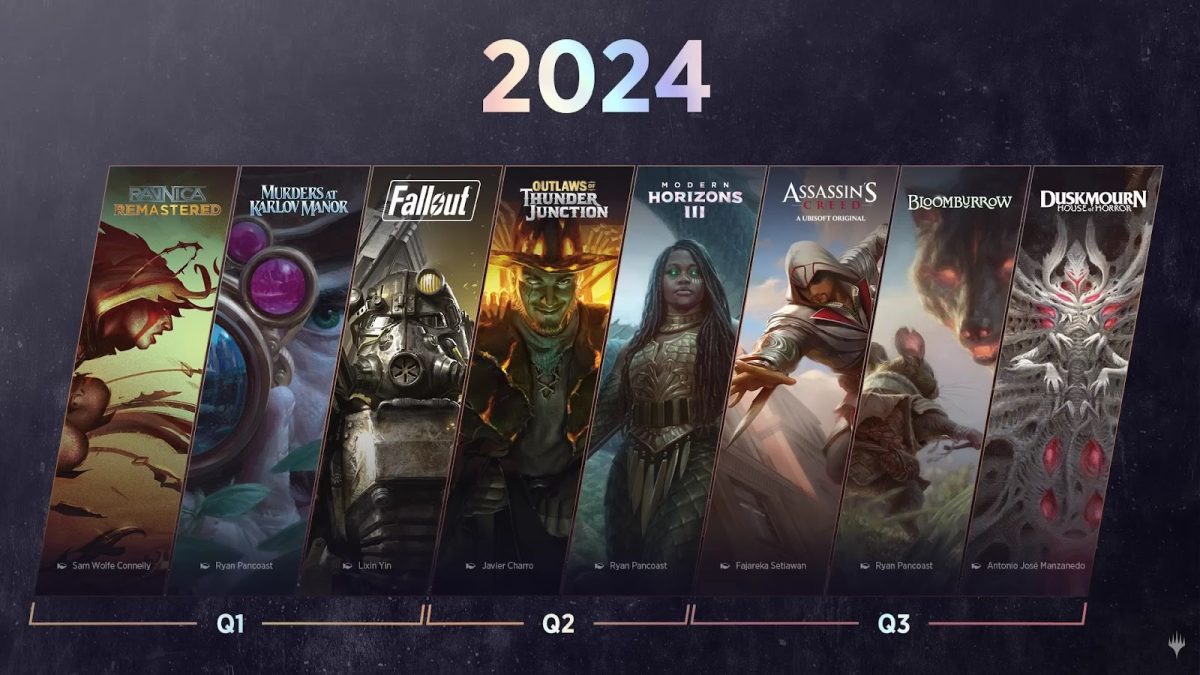
MTG Proxy Guide in the 2024 Magic: The Gathering Release Calendar

Welcome to your ultimate guide to the Magic. The Gathering (MTG) set a release schedule for 2024! Whether you’re a seasoned planeswalker or a newcomer eager to dive into the rich lore and strategic depth of MTG proxy, staying updated with the latest set releases is crucial. 

As you anticipate each set’s new cards and strategies, you might also be exploring the world of MTG proxies. From printing MTG proxies for playtesting to collecting, we’ve covered everything you need to know about the 2024 release schedule. Moreover, we also explore how MTG proxies fit into your gaming experience.

Understanding MTG Proxy

Before we dive into the release schedule, let’s briefly touch upon the concept of MTG proxies. 

Proxies are alternative versions of MTG cards. Players use it for various reasons, including playtesting new decks without the need to purchase expensive cards. Additionally, during play, these cards are also used to protect valuable cards.

Whether you’re looking to print MTG proxy cards for personal use or explore the world of MTG proxies more broadly, it’s important to respect the game’s community and legal guidelines.

2024 Set Release Highlights

Magic: The Gathering’s 2024 calendar is packed with exciting releases that promise to enhance your gameplay and deck-building strategies. Here’s what you can look forward to:

Winter 2024: Frostfire Covenant

Kick off the year with Frostfire Covenant, a set that explores the icy landscapes and fiery tempers of a new, mystic plane. Perfect for players who love thematic dichotomies and innovative mechanics.

Spring 2024: Chronicles of Alara

Return to the shattered plane of Alara with Chronicles of Alara. This set is anticipated to bring back beloved mechanics and introduce new ones. This makes it a perfect time for veterans and newcomers to explore MTG proxies for experimental decks.

Summer 2024: The Goblin Games

Get ready for chaos with The Goblin Games. This lighthearted, goblin-themed set promises fun, mayhem, and strategic depth. It’s an excellent opportunity for proxy players to test out unconventional strategies without breaking the bank.

Fall 2024: Eldritch Moon Rising

Conclude the year with the dark and mysterious Eldritch Moon Rising. This set revisits the horror and eldritch themes loved by many. Furthermore, they offer complex mechanics and powerful cards that will be a delight to proxy and play.

Making the Most of MTG Proxies in 2024

With each new set release, exploring MTG proxies becomes even more enticing. It allows you to experience the full breadth of the game’s strategic possibilities without immediate investment in new cards. 

Whether you’re playtesting potential additions to your competitive deck or enjoying casual games with friends, MTG proxies can enhance your MTG experience.

FAQs

Can you mix MTG cards? 

Yes, you can mix cards. The Gathering (MTG) cards from different sets in most formats, as long as they meet the deck-building rules of the format you are playing.

Which is the 2024 MTG set’s first? 

The first Standard MTG set was released in 2024. Murders at Karlov Manor transported players to Ravnica where they had to get ready to find out who had betrayed them.

Which Magic set is the oldest? 

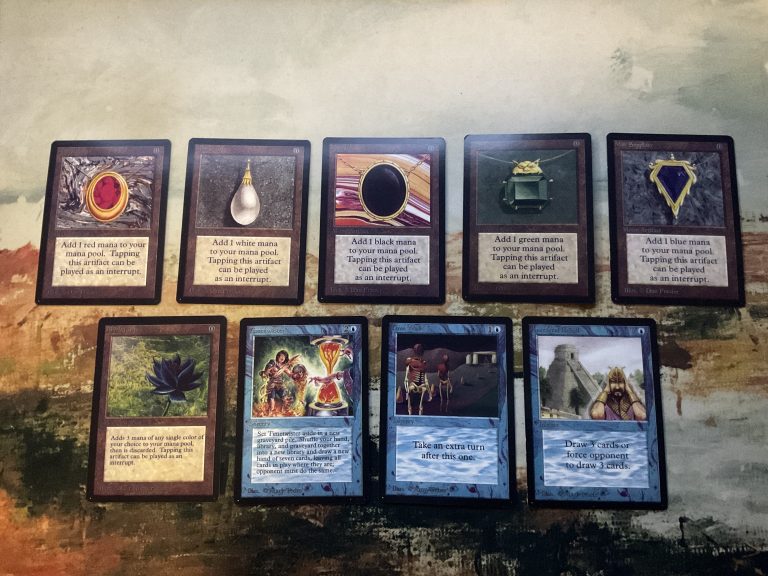
The oldest Magic set is “Alpha,” also known as “Limited Edition Alpha,” released in August 1993.

How many Magic sets a year? 

Historically, Wizards of the Coast releases around 4 to 5 standard sets of Magic: The Gathering cards each year, along with various supplemental products and special sets.

Conclusion

The 2024 Magic: The Gathering set release schedule promises a year filled with exciting gameplay, captivating lore, and endless strategic exploration. 

By incorporating MTG proxy into your play, you can freely experiment with new sets and cards. This ensures your MTG experience is always fresh and enjoyable. 

Remember, whether you’re printing MTG proxy or exploring new decks. The most important part of MTG is the community and the shared love of the game. Happy gaming!